Describe your retaining wall material
A description and photographs can help a contractor prepare for a discussion. A professional can assess visible conditions; concealed details may need further investigation.
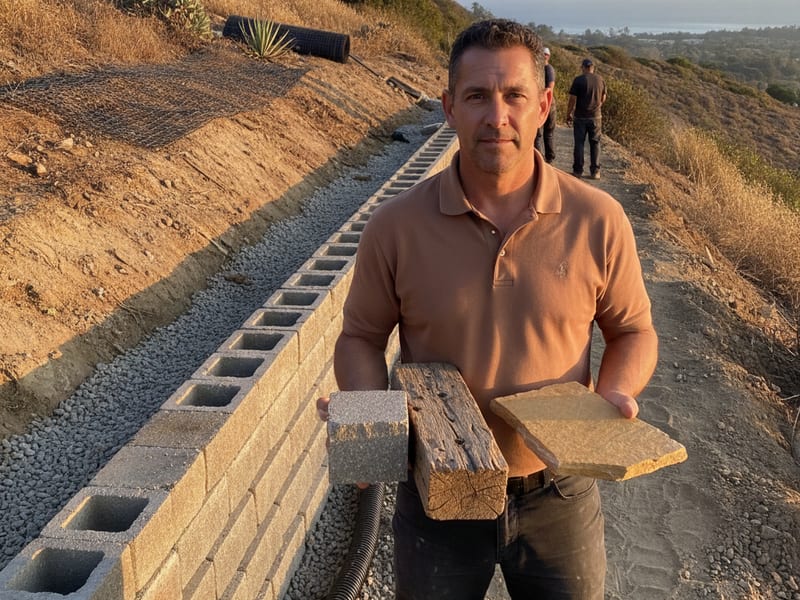
What you'll learn
- Visible details that can help describe a wall
- Why appearance may not identify the full wall system
- How to share information without disturbing the wall
Step by step
- Look from a safe place If the wall appears unstable, keep away and ask a qualified professional to assess it.
- Describe the visible face Note whether the face appears to be wood, stone, concrete units, or a continuous concrete surface. Joints and surface finishes can be useful details.
- Share existing records Provide any plans, product information, or prior repair records you have. The visible face alone may not show the structure behind it.
- Ask for confirmation Share safe-distance photographs and observations with the contractor. An assessment may be needed before materials or repair options can be confirmed.
Do not tap, move, or probe the wall to identify its material. Ask a professional if you are unsure.
Rather have a pro handle it?
Tell us about your project and ask about available local contractor options.
Keep learning.
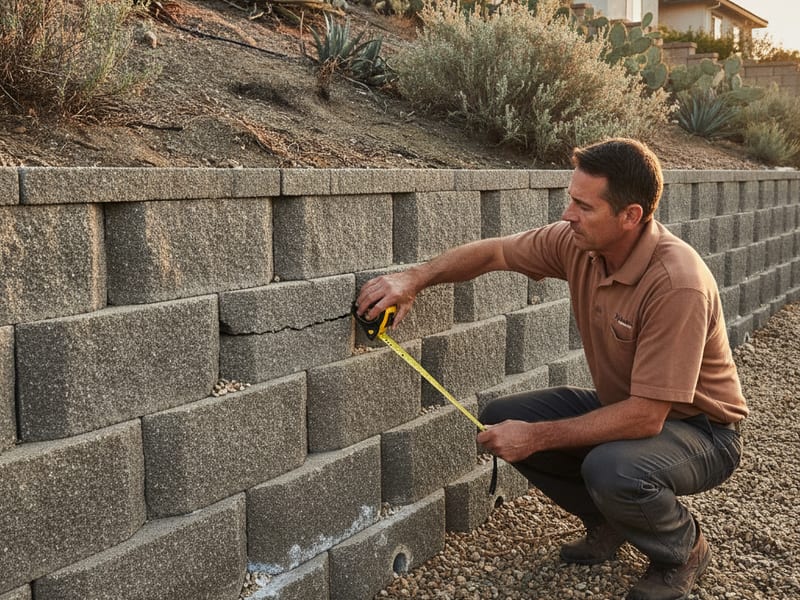
Notice changes in a retaining wall
Visible changes can help a professional understand a wall’s condition. Observe from a safe location and avoid disturbing a wall that may be unstable.
Recognize retaining wall drainage concerns
A drainage outlet is one part of a wall system. Note visible water or staining from a safe location and ask a professional to assess the wall and its drainage.
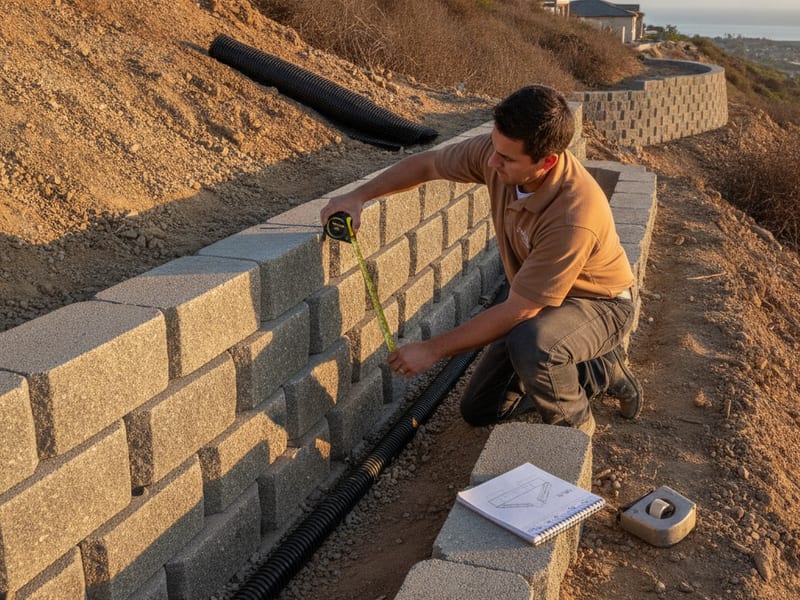
Gather wall dimensions for a permit discussion
Permit measurements and other triggers depend on the authority serving the property. Share available plans and visible dimensions with the building department or a qualified professional.