Retaining wall planning resources
Hands-on guides for planning a retaining wall before you collect any quotes, written with San Diego hillside lots and soils in mind.
Retaining wall planning guides
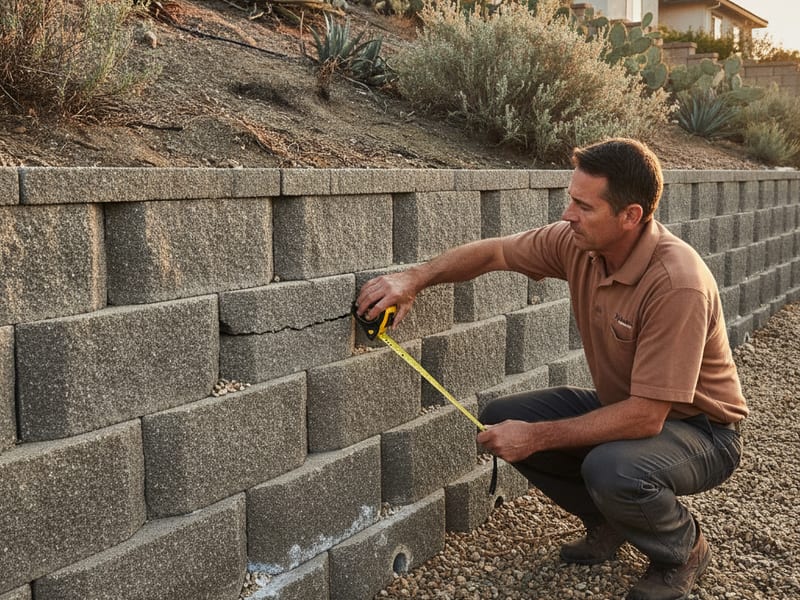
Recognize retaining wall drainage concerns
A drainage outlet is one part of a wall system. Note visible water or staining from a safe location and ask a professional to assess the wall and its drainage.
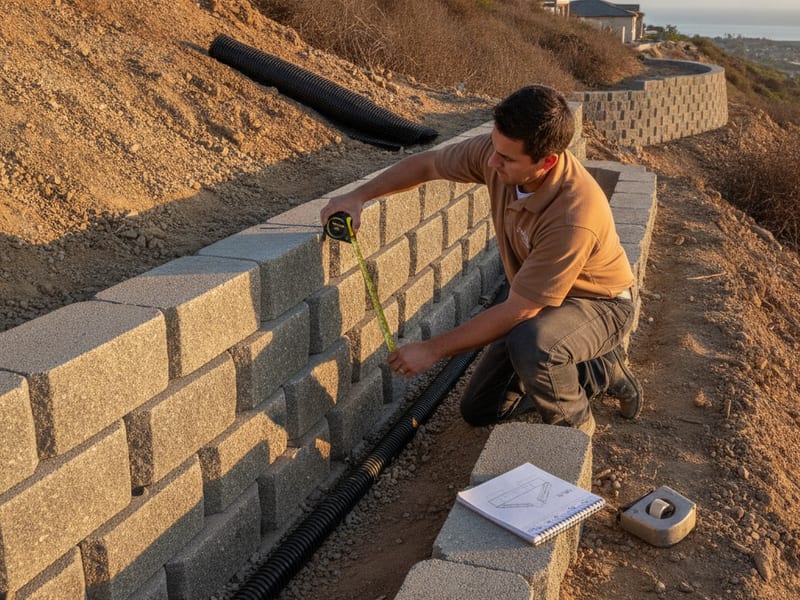
Gather wall dimensions for a permit discussion
Permit measurements and other triggers depend on the authority serving the property. Share available plans and visible dimensions with the building department or a qualified professional.
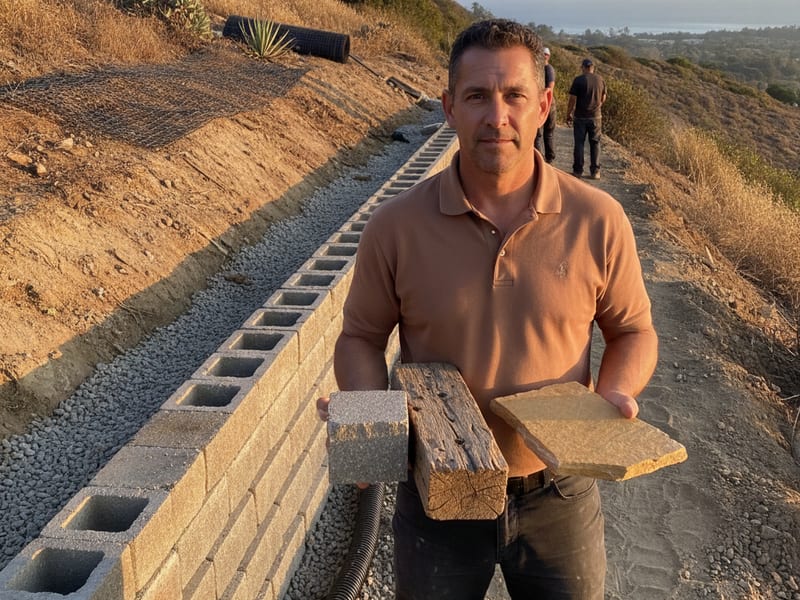
Describe your retaining wall material
A description and photographs can help a contractor prepare for a discussion. A professional can assess visible conditions; concealed details may need further investigation.
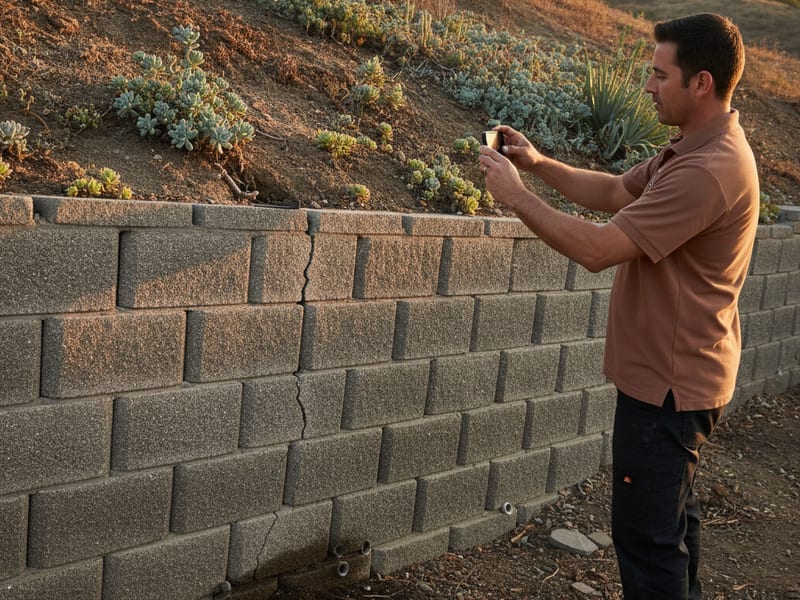
Prepare a retaining wall damage record
Organize safe-distance photographs, dates, and existing records to share with a contractor or insurer. A record does not establish the cause or coverage.
When is it time to call a professional?
These signs are reasons to stop disturbing the wall and ask a qualified professional for an assessment.
- A new lean or bulge
A change in alignment deserves a qualified assessment. Keep clear of a wall that appears unstable.
- A widening crack or opening joint
A visible crack does not identify its own cause. Share safe-distance photographs and any plans with a professional.
- Water or staining on the face
Ask a professional to assess the wall and drainage. Do not probe openings or pour water behind the wall to test it.
- Ground changes near the wall
Settlement or movement in surrounding ground needs an assessment in the context of the site.
- A wall near a driveway or structure
Tell the project team about nearby loads and structures so they can assess the design and the permit path.
Further reading
Want to be matched with a retaining wall contractor
Tell us about your project and ask about available contractor options.